Dreaming about more space in Otis Orchards-East Farms? Acreage can open the door to gardens, shops, animals, extra storage, and room to breathe, but it also comes with questions that do not always show up in a standard home search. If you are thinking about buying land or a home on acreage here, the smartest move is to look beyond the lot size and focus on how the property actually functions day to day. This guide walks you through the key things to verify before you buy, so you can move forward with confidence. Let’s dive in.
Why acreage works differently
Buying acreage in Otis Orchards-East Farms is often as much a utility and land-use decision as it is a lifestyle choice. Spokane County’s planning framework for rural areas focuses on preserving rural character, open space, rural economies, and core services like domestic water and fire protection, which shapes how land may be used over time.
That matters because two properties with similar acreage can offer very different possibilities. One parcel may have water access, irrigation service, and permitted outbuildings, while another may have land-use limits, septic constraints, or added carrying costs that change the picture.
Understand the local parcel mix
Otis Orchards-East Farms is not a one-size-fits-all acreage market. County assessor examples in the area show parcels ranging from about half an acre to more than four acres, including a 0.49-acre vacant parcel, a 1.58-acre parcel, a 2.23-acre parcel, and a 4.04-acre parcel.
That range is helpful if you are trying to define what “acreage” means for your goals. In this area, acreage can mean anything from a modest lot with extra elbow room to a larger homesite with substantial outbuildings and more complex infrastructure.
Look beyond acreage count
The number of acres is only the starting point. What often matters more is how the land is improved and whether those improvements support the way you want to live.
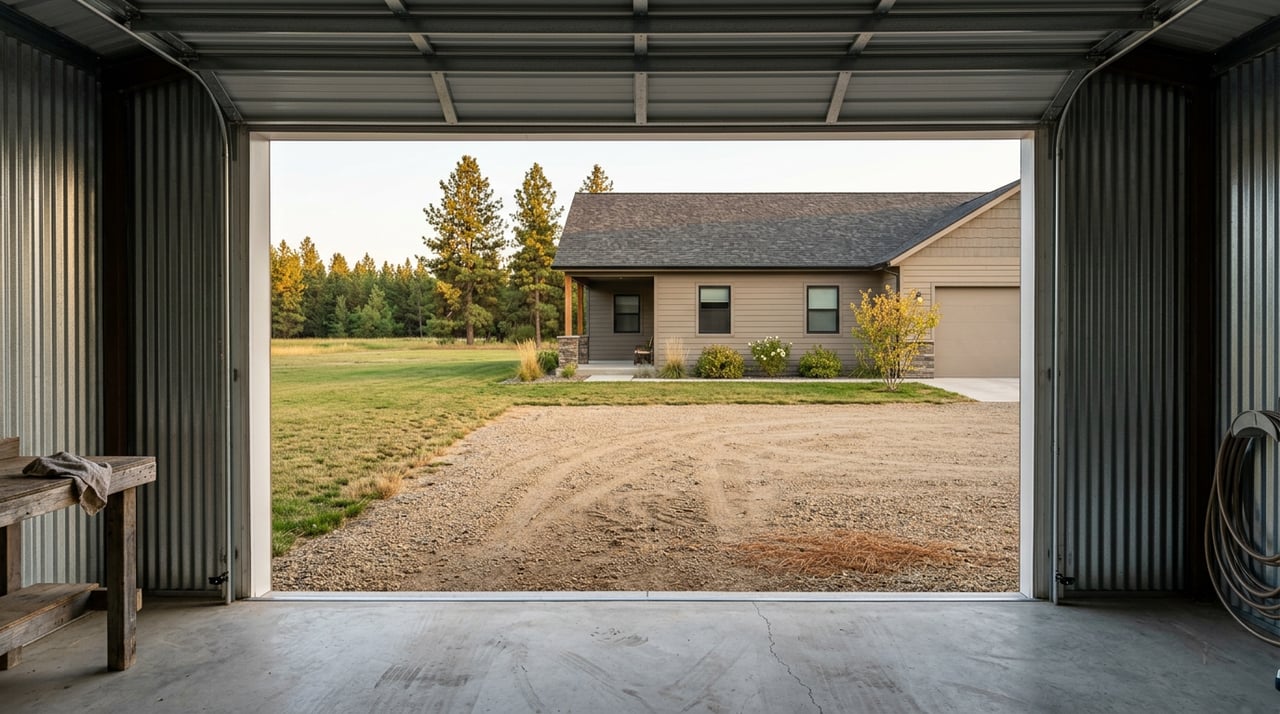
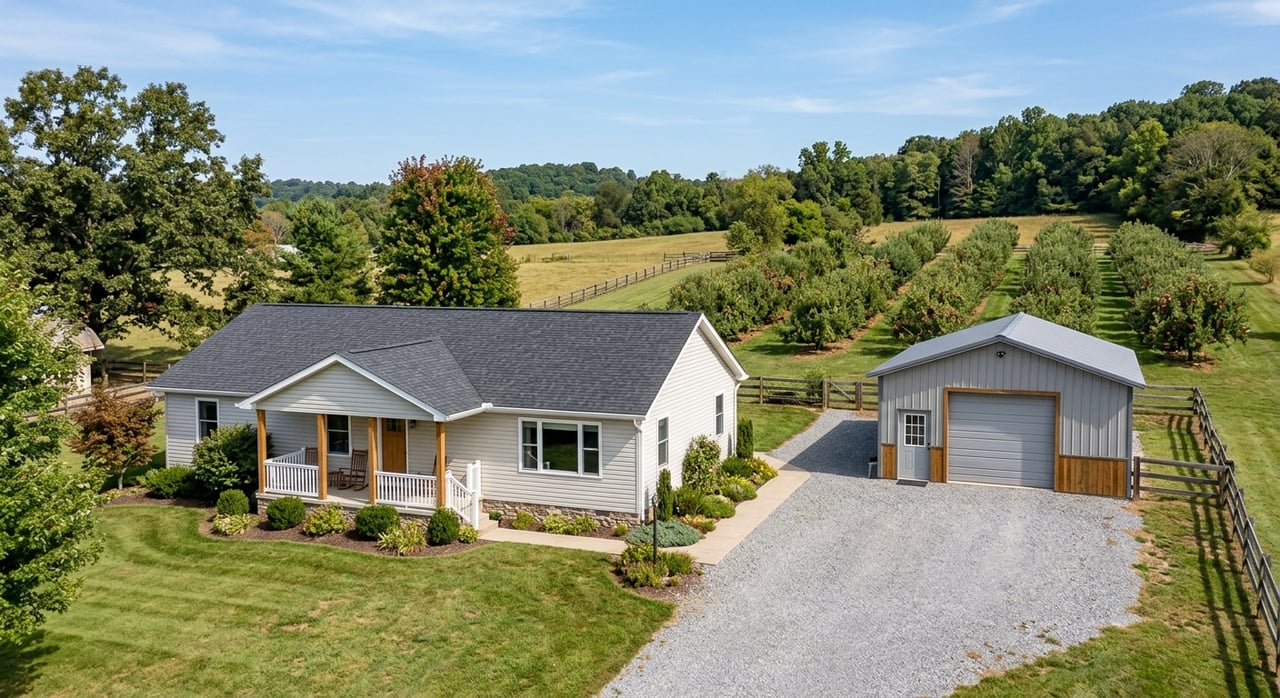
Assessor records in Otis Orchards-East Farms show a wide mix of property setups. Examples include parcels with barns, pole-frame buildings, lean-tos, attached garages, and large general-purpose buildings. If you want workspace, storage, hobby space, or room for equipment, you should verify not only that those structures exist, but that they are permitted and reflected in county records.
Verify water service first
Water service in this part of Spokane County is highly parcel-specific. The Spokane Aquifer Joint Board notes that the broader Spokane area has more than 20 water providers and recommends confirming the water purveyor by specific address, since small unmapped systems also exist.
That means you should not assume service based on a neighborhood name alone. In the Valley area, county water-district precinct maps include providers such as East Spokane Water District No. 1 and Spokane Water District No. 3, so it is important to identify exactly who serves the parcel you are considering.
Questions to ask about water
Before you buy, ask:
- Is the property served by public water, a private well, or a combination of systems?
- Who is the exact water purveyor for this address?
- If there is a private well, when was it last tested?
- Is any water-adequacy documentation available?
If the property uses a well, Spokane Regional Health District says private wells are the owner’s responsibility. It also notes that some private wells in Spokane County have shown elevated uranium or arsenic, which makes testing an important part of due diligence.
Check irrigation service and costs
Irrigation can be a major benefit on acreage, especially if you plan to maintain landscaping, gardens, or larger outdoor areas. In Otis Orchards-East Farms, irrigation service may be a separate layer from domestic water service, so you need to understand both.
Consolidated Irrigation District No. 19 states that residential customers are billed through county property taxes, with the base rate appearing as Irrigation District Principal. Its published information also notes that a minimum one-acre irrigation assessment applies to all non-vacant lands except those annexed for domestic service only, and the district specifically lists East Farms and Otis Orchards pressure areas.
This is one reason acreage buyers should review tax bills carefully. A property’s monthly mortgage payment may be only part of the true ownership cost.
Confirm septic status and future flexibility
Septic is one of the biggest due diligence items on rural or semi-rural property. If a home is on an on-site septic system, you need to know whether it was properly permitted, whether records exist, and how the system affects your future plans.
Spokane Regional Health District requires permits and ongoing maintenance for on-site systems. It also states that beginning January 1, 2027, Washington law will require an approved operations-and-maintenance inspection before property transfer or sale.
That upcoming rule makes recordkeeping even more important. If you are buying a property now, it is wise to ask for the as-built or record drawing, pump history, and inspection history so you understand the condition of the system and what may be required later.
Septic can limit what you do next
If you are hoping for a second residence, an ADU, or future subdivision, septic capacity and county code become critical. Under Spokane County code, residential uses on lots legally created after March 21, 2000 that require a new on-site sewage system generally need five acres per dwelling unit, with exceptions.
In practical terms, that means your long-term plans may not match what the parcel can legally support. Before you assume you can add another dwelling or split the property later, verify land-use rules and septic feasibility early in the process.
Review outbuildings and permits
One of the biggest draws of acreage is the extra utility that comes with shops, barns, sheds, and larger accessory structures. In Otis Orchards-East Farms, assessor records show that many parcels include substantial additional buildings, from barns to pole-frame structures to general-purpose buildings.
That is a plus only if the improvements fit your intended use and are properly documented. You should confirm whether each structure was permitted, whether it appears in county records, and whether any future upgrades or conversions would require additional approval.
Watch for critical areas and site constraints
Not every usable-looking acre is fully buildable or equally functional. Spokane County planning highlights several critical areas that can affect rural parcels, including wetlands, fish and wildlife habitat, frequently flooded areas, geologic hazards, and critical aquifer recharge areas.
These site conditions can shape where you build, where you place additions, and how you manage the property. They can also influence insurance, drainage planning, and the overall ease of ownership.
Wildfire and climate questions matter
Spokane County’s planning materials also point to climate-related concerns such as hotter days, reduced snowpack, and increased wildfire susceptibility. On larger parcels, that makes questions about defensible space, vegetation management, and insurance availability especially relevant.
If you are comparing two acreage properties, this is one more reason to look beyond the photos and ask how the land performs in real conditions. A beautiful setting is important, but so is understanding what it takes to maintain and protect it.
Check access, easements, and maintenance
Acreage ownership often comes with access details that are easy to overlook. You will want to know whether roads, driveways, and utility lines are public or private, and whether there are recorded easements or maintenance agreements in place.
This can affect convenience, cost sharing, and even financing or future improvements. A long driveway or private access road may be perfectly workable, but you should know exactly who is responsible for upkeep before closing.
Review the full carrying cost
Acreage ownership costs are not always obvious at first glance. County tax records in the area show that some parcels include charges beyond base property tax, including irrigation district principal, aquifer principal, stormwater, weed control, and fire district levies.
That is why it is smart to review the actual tax bill, not just an estimate. When you compare properties, ask for a breakdown of any special district charges so you can evaluate the true ongoing cost of ownership.
A smart buyer checklist
If you are preparing to buy acreage in Otis Orchards-East Farms, keep this checklist handy:
- Confirm the exact water source and the provider by address
- Verify whether the property has public water, a private well, irrigation service, or a combination
- Request recent well testing and any water-adequacy documentation
- Confirm the septic system is permitted and ask for as-built records
- Review pumping and inspection history for the septic system
- Ask who will handle any required transfer inspection if your closing occurs after January 1, 2027
- Verify that barns, shops, sheds, and other outbuildings are permitted
- Check for wetlands, floodplain, steep slopes, aquifer recharge issues, or geologic hazards
- Confirm whether access roads and utilities are public or private
- Review recorded easements and maintenance agreements
- Study the tax bill for special district charges
- Verify what county zoning and septic rules allow if you want animals, gardening, a greenhouse, another residence, or future subdivision
For address-level water verification, the Spokane Aquifer Joint Board provider lookup is a helpful starting point. For septic changes or new systems, Spokane Regional Health District recommends working with licensed septic designers or engineers through its application and system guidance.
Match the parcel to your plan
The right acreage property is not simply the largest one you can afford. It is the one whose water, septic, irrigation, access, improvements, and land-use rules match the life you want to build there.
That is especially true in a place like Otis Orchards-East Farms, where parcel sizes, infrastructure, and permitted uses can vary significantly from one property to the next. A careful review up front can help you avoid surprises and buy with much more confidence.
If you are considering acreage in Spokane County and want help evaluating the practical side of a property, Amy Khosravi can help you navigate the details and make sure the home and land fit your goals.
FAQs
What should you verify before buying acreage in Otis Orchards-East Farms?
- You should confirm the water source, water provider, septic status, outbuilding permits, access easements, special tax charges, and any land-use constraints tied to the parcel.
How do you find the water provider for an Otis Orchards-East Farms property?
- The best first step is to verify the provider by specific address using the Spokane Aquifer Joint Board’s water provider resources, since service can vary parcel by parcel.
Does acreage in Otis Orchards-East Farms always include irrigation service?
- No, irrigation service is not automatic, so you should verify whether the parcel is served by an irrigation district and review any related assessments on the tax bill.
Why is septic important when buying Spokane County acreage?
- Septic affects current use and future flexibility, including whether a property may support another dwelling, additions, or certain land uses under county rules.
Can you add a second dwelling on acreage in Otis Orchards-East Farms?
- Possibly, but you should verify zoning, septic capacity, and Spokane County code requirements before assuming a second dwelling, ADU, or future subdivision is allowed.
Are larger parcels in Otis Orchards-East Farms always easier to use?
- Not necessarily, because wetlands, flood areas, aquifer recharge concerns, geologic hazards, access issues, or utility limits can affect how usable the land is.